Two crafts, one pair of hands

Our Craft

We keep our process narrow and deep: reclaimed old wood, and metal shaped by hand. These are the only things we make — which is why we can make them well.

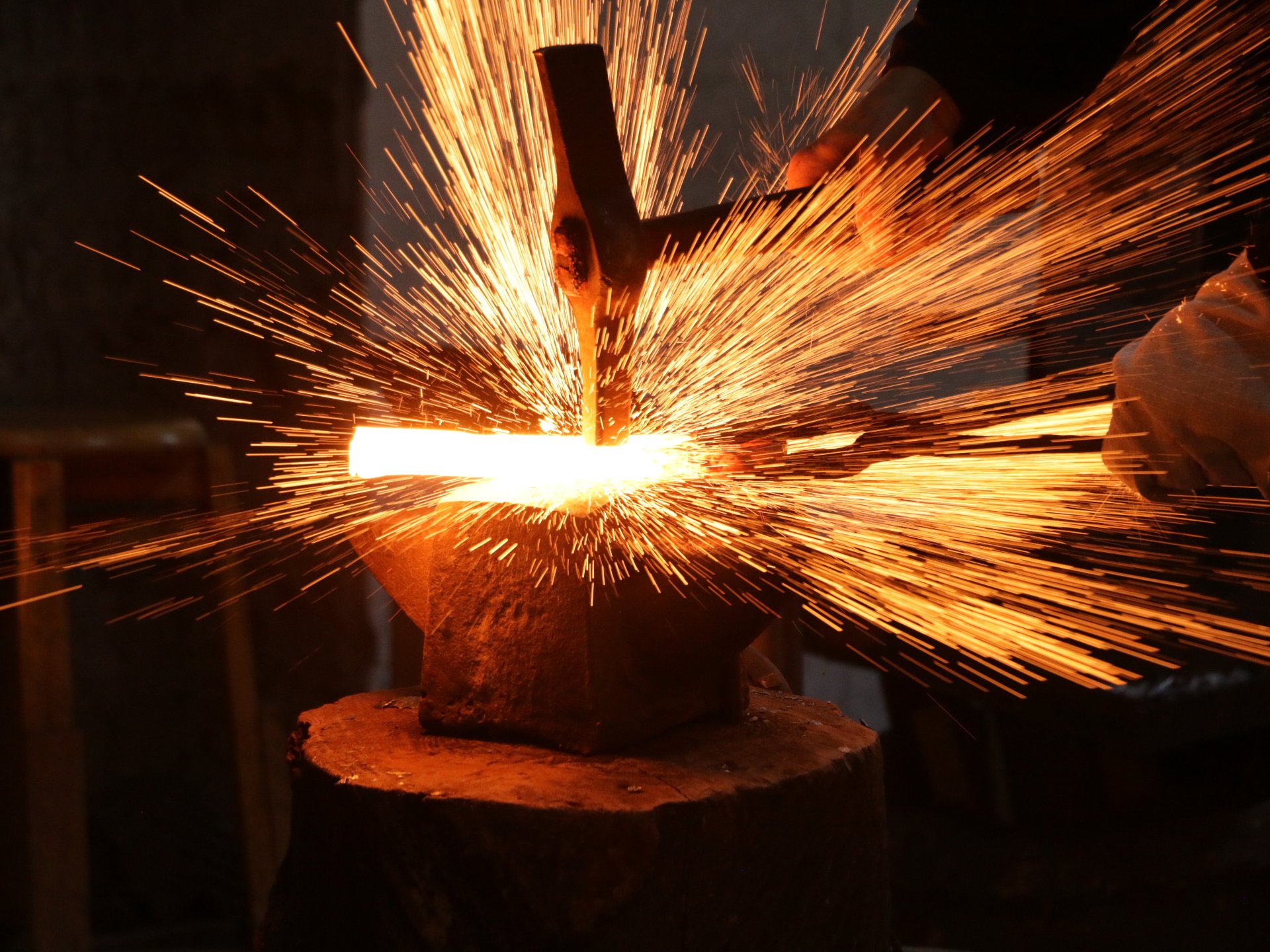
Forging steel on the anvil, sparks flying
Craft one

Hand-hammered metal

No molds, no machines. A bar of solid metal goes into the forge, comes out orange, and is shaped in the two minutes the heat allows. The hammer marks left on the surface are not decoration — they are the record of the process, and the reason light moves across our frames differently all day.

  • Solid brass, copper and bronze, forged one blow at a time
  • Annealing between passes so the metal stays alive
  • Every frame checked by hand before assembly
  • Patinas deepened over years, not sprayed on in a booth
Craft two

Reclaimed old wood

Our timber comes from demolished houses and retired beams — decades of grain, nail holes, saw marks and weathering left exactly where they fell. We don't erase the past of a board; we build around it. Old wood is drier, denser and more stable than new lumber, which is why furniture made from it keeps its shape for generations.

  • Salvaged old-growth elm and other regional hardwoods
  • Boards selected by hand — grain, color and history
  • Natural oils and waxes, no heavy lacquer
  • Each piece unique by definition
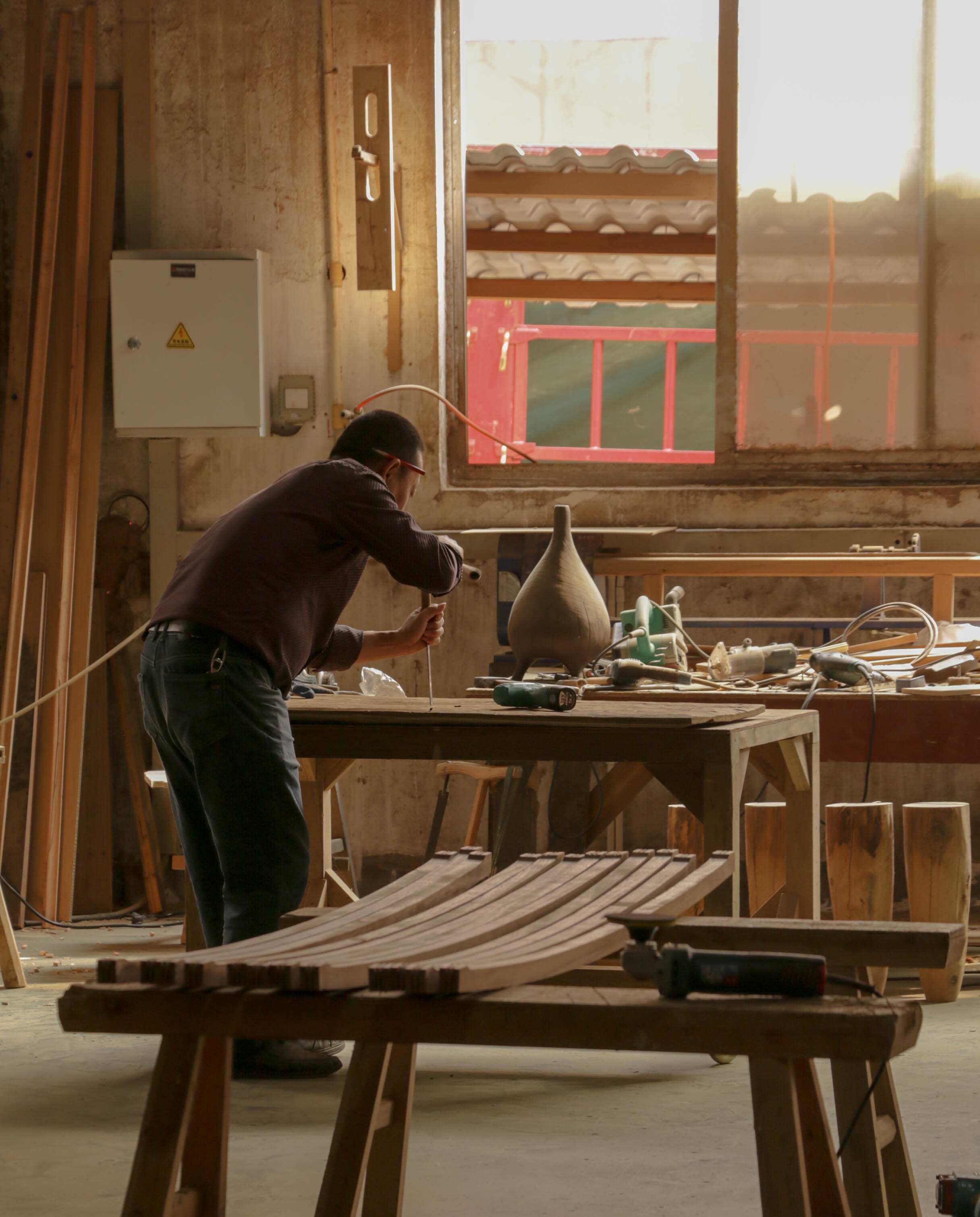
Woodworker shaping reclaimed timber in the workshop
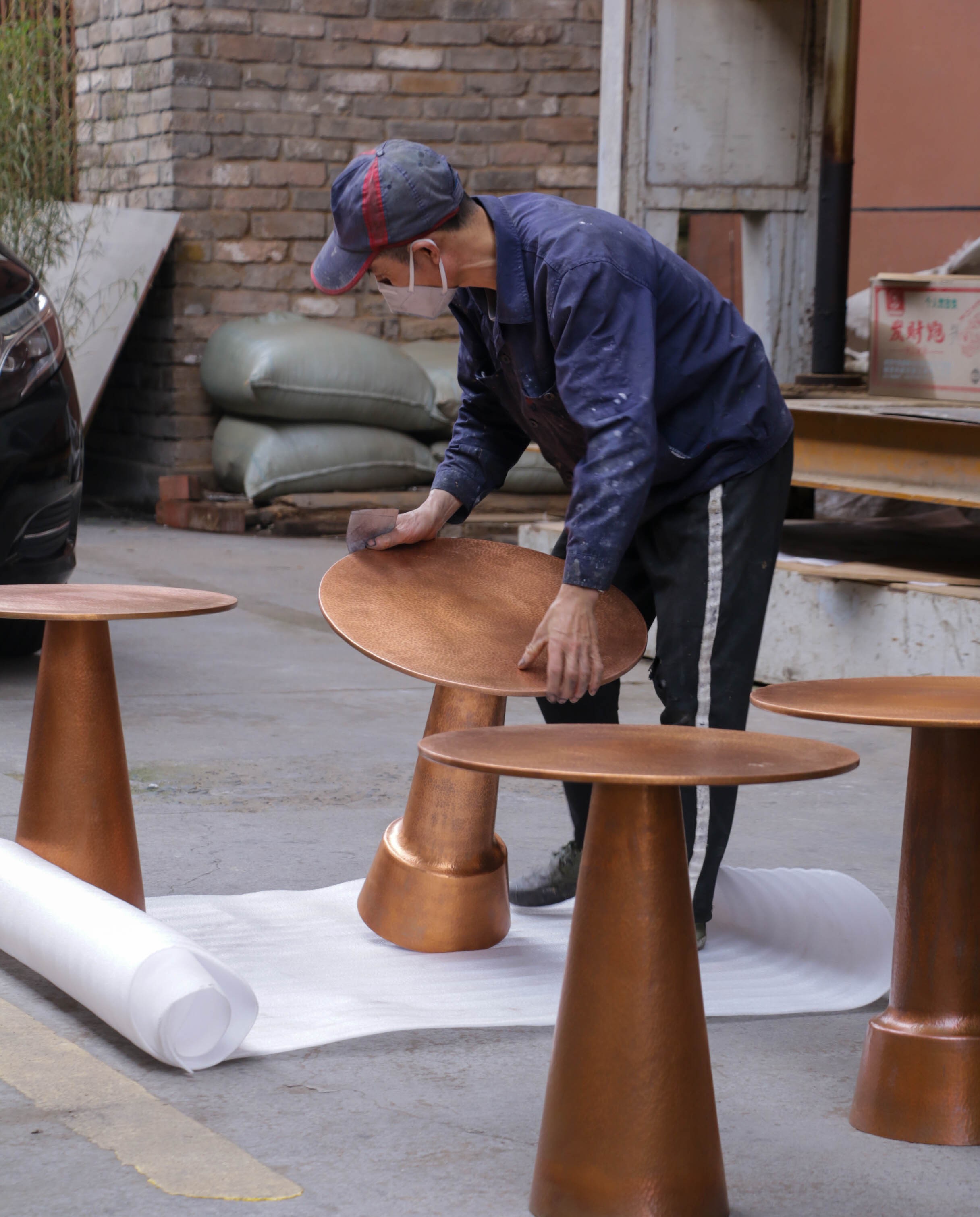
Copper side tables being inspected and packed in the yard
The workshop

Everything under one roof

Design, forging, woodworking, assembly and finishing all happen in our own workshop in Chun'an, Hangzhou. Nothing is outsourced. This is why our furniture feels coherent — and why there's one supplier to call if anything needs adjusting.

We photograph the workshop the way it really is. Not styled, not staged. That's how we'd like you to know us.

Little Craftsman ink seal — a child craftsman at the workbench
The name on the door

Why “Little Craftsman”

Our name comes from a simple image — a child bent over a workbench, learning to do things properly by hand. Every maker in our workshop started out exactly there: small, careful, unhurried.

We never grew out of it. The hammer marks stay visible, the nail holes stay in the wood, and every piece still passes through human hands before it leaves the floor.

The heart of a craftsman · the work of craftsmanship.